

Two Fires, Two Terrains — One National Infrastructure Problem

1. Washington State — Utilities Are Feeling the Heat
Wildfire risk is now reshaping utility economics in real time.
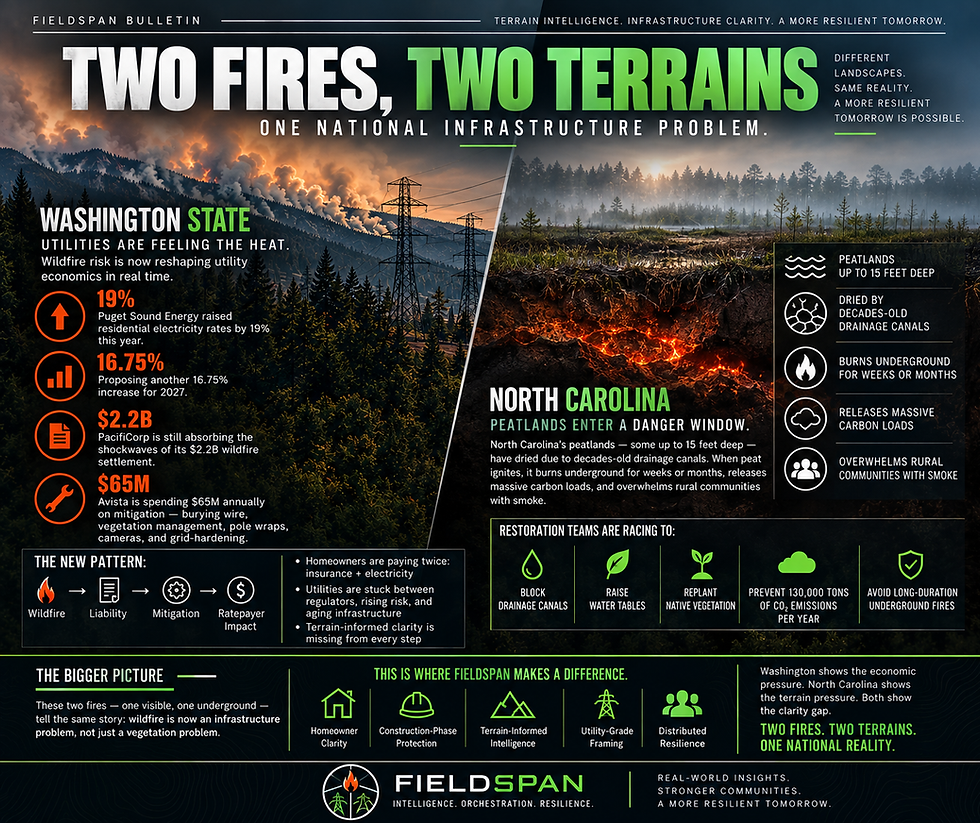
Puget Sound Energy raised residential electricity rates by 19% this year and is proposing another16.75% increase for 2027. PacifiCorp is still absorbing the shockwaves of its $2.2B wildfire settlement. Avista is spending $65M annually on mitigation — burying wire, vegetation management, pole wraps, cameras, and grid‑hardening.
This is the new pattern:
Wildfire → Liability → Mitigation → Ratepayer impact
Homeowners are paying twice: insurance + electricity
Utilities are stuck between regulators, rising risk, and aging infrastructure
Terrain‑informed clarity is missing from every step
This is exactly the gap FieldSpan is designed to fill.
2. North Carolina — Peatlands Enter a Danger Window
On the opposite side of the country, a completely different fire threat is emerging.
North Carolina’s peatlands — some up to 15 feet deep — have dried due to decades‑old drainage canals. When peat ignites, it burns underground for weeks or months, releases massive carbon loads, and overwhelms rural communities with smoke.
Restoration teams are racing to:
block drainage canals
raise water tables
replant native vegetation
prevent 130,000 tons of CO₂ emissions per year
avoid long‑duration underground fires
This is a reminder that wildfire isn’t just a Western terrain problem — it’s a land‑management and infrastructure problem.
3. Why These Two Signals Matter to Founders Circle
These two fires — one visible, one underground — tell the same story:
Wildfire is now an infrastructure problem, not just a vegetation problem.
Washington shows the economic pressure. North Carolina shows the terrain pressure. Both show the clarity gap.
This is the exact space where FieldSpan, FireRisk.ai, Wildfire Pro Shop, and our emerging partners operate:
homeowner clarity
construction‑phase protection
terrain‑informed intelligence
utility‑grade framing
distributed resilience
Two fires. Two terrains. One national reality.
FieldSpan is built for this moment.


Comments